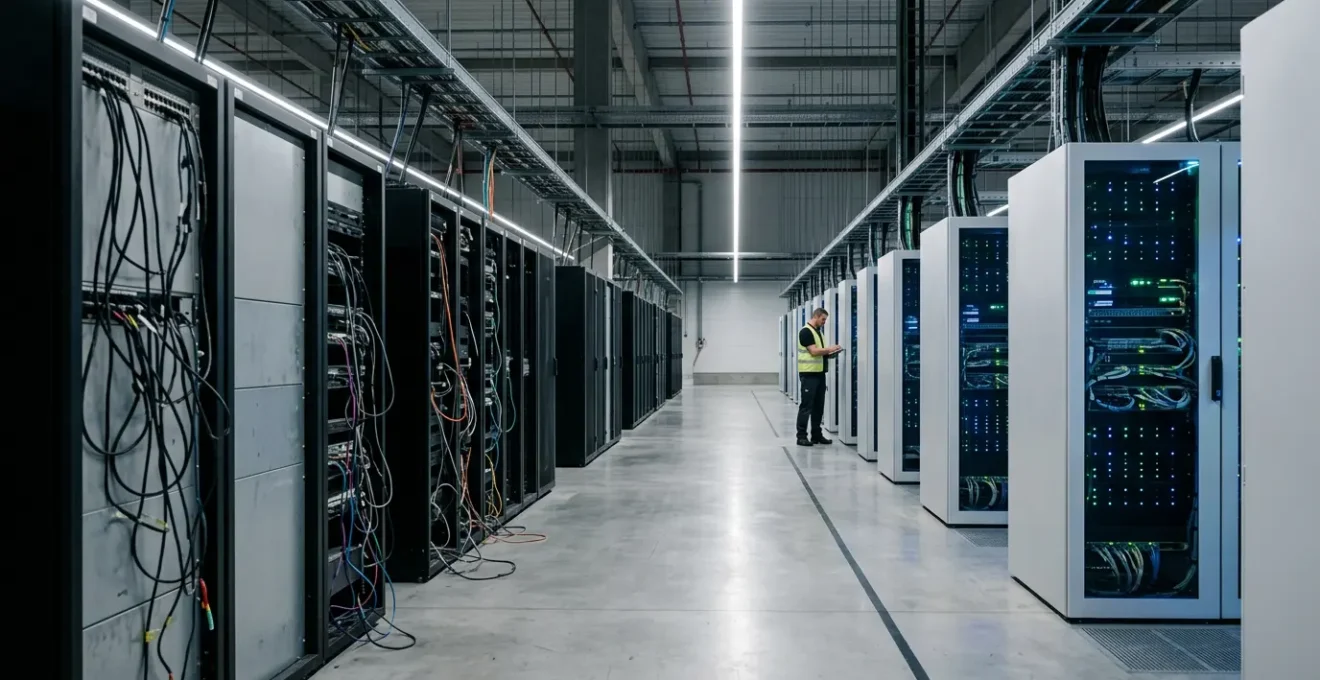
Contrary to the common view of decommissioning as a simple cleanup, retiring legacy servers is a high-stakes operation where procedural errors lead to severe legal and financial liabilities.
- The real cost of legacy data centres is not just power and cooling, but the significant operational drag and security risks they represent.
- Data destruction must be physically provable to meet GDPR audit standards; simple wiping is insufficient and non-compliant.
Recommendation: Treat asset disposal not as a logistical task, but as a core security and compliance function that demands a documented chain of custody from start to finish.
For IT Directors and Facilities Managers, the persistent hum of an on-premise data centre is often a source of mounting anxiety. These legacy systems, once the bedrock of the enterprise, now represent a significant financial drain and a growing security risk. While the decision to migrate to the cloud is a strategic leap forward, the process of decommissioning the physical hardware left behind is fraught with peril. It’s a task often underestimated, viewed as mere janitorial work at the end of a complex IT project.
Standard advice often revolves around basic data backups and generic recycling. However, this perspective dangerously overlooks the stringent legal frameworks governing data privacy and environmental responsibility. In an era of regulations like GDPR, a single misstep in the asset disposal process is not just an operational error—it’s a compliance failure that can result in crippling fines, data breaches, and irreparable reputational damage. The challenge is not simply to empty a server room.
The true key to a successful decommissioning lies in shifting the mindset from « disposal » to « defensible disposition. » This means executing a methodical, documented, and auditable process for every single asset. This is not about simply getting rid of old equipment; it’s about proving, without a shadow of a doubt, that data has been irretrievably destroyed and that hardware has been recycled or resold in full compliance with all regulations. This guide provides a strategic framework for navigating this complex process, ensuring security, compliance, and even recovering capital along the way.
This article provides a comprehensive walkthrough of the critical phases and considerations for a secure and compliant decommissioning project. It will cover the financial imperatives, the technical requirements for data destruction, strategic migration pathways, and the non-negotiable standards for environmental disposal and value recovery.
Summary: A Methodical Guide to Retiring Legacy Physical Servers During a Cloud Migration
- Why Maintaining Physical Data Centres Continues to Bleed Your IT Budget Dry?
- How to Physically Destroy Hard Drives While Satisfying GDPR Audit Requirements?
- Co-Location vs Complete Cloud Migration: Which Offers Better Stepping Stones?
- The Asset Disposal Mistake That Leaves Customer Data Accessible in Landfills
- Recovering Capital by Reselling Valid Components Through Certified Channels
- How to Connect 20-Year-Old Presses to Cloud Analytics Platforms?
- The E-Waste Disposal Mistake That Completely Invalidates Your Environmental Accreditations
- Architecting Energy-Efficient Tech Infrastructures for Green UK Businesses
Why Maintaining Physical Data Centres Continues to Bleed Your IT Budget Dry?
The most visible costs of an on-premise data centre—power, cooling, and physical space—are merely the tip of the iceberg. The true financial burden is the persistent operational drag these legacy systems impose on an organization. This includes the direct costs of hardware maintenance contracts, spare parts inventory, and software licenses that are no longer strategic. More significant are the indirect costs associated with personnel, as skilled IT staff spend valuable time managing aging infrastructure instead of driving innovation on cloud platforms.
Migrating to the cloud is not just a technological shift; it’s a financial strategy. The move can yield a 25-35% lower total cost of ownership (TCO) compared to maintaining on-premise infrastructure. This is not a theoretical number. For example, Mazda’s migration to the cloud resulted in an estimated 50% lower TCO over a five-year period alongside a 70% performance increase. These savings are realized by eliminating capital expenditures on hardware refreshes and reducing the operational overhead of day-to-day management.
To fully grasp the financial imperative, a comprehensive TCO analysis is essential. This must go beyond the obvious expenses and include a detailed accounting of all associated costs. A thorough calculation provides the clear, data-driven business case needed to justify the decommissioning project to stakeholders.
- Equipment and infrastructure costs: Include servers, spare parts, and supplies.
- Datacenter costs: Calculate power, cooling, racks, and physical space requirements.
- Software costs: Add subscriptions, licenses, and royalties/commissions.
- Payroll costs: Include all personnel, outsourced hires and consultants.
- Security and maintenance: Factor in repairs, redundancy measures and firewalls.
How to Physically Destroy Hard Drives While Satisfying GDPR Audit Requirements?
For any organization subject to GDPR or similar data protection laws, the term « data deletion » is dangerously misleading. Simply wiping a drive or running degaussing processes is often insufficient to produce the auditable proof of destruction required by regulators. True compliance demands defensible destruction: a physically verifiable and irreversible process that renders data completely unrecoverable. This is where physical destruction, specifically shredding, becomes a non-negotiable security control.
The standard for this process is not arbitrary. For instance, the German DIN 66399 standard requires shred sizes of H-5 (≤10mm²) for highly confidential data, ensuring that the physical platters are reduced to fragments too small for any forensic recovery. This level of granular destruction provides the concrete evidence an auditor needs to see. Anything less introduces an unacceptable level of risk.
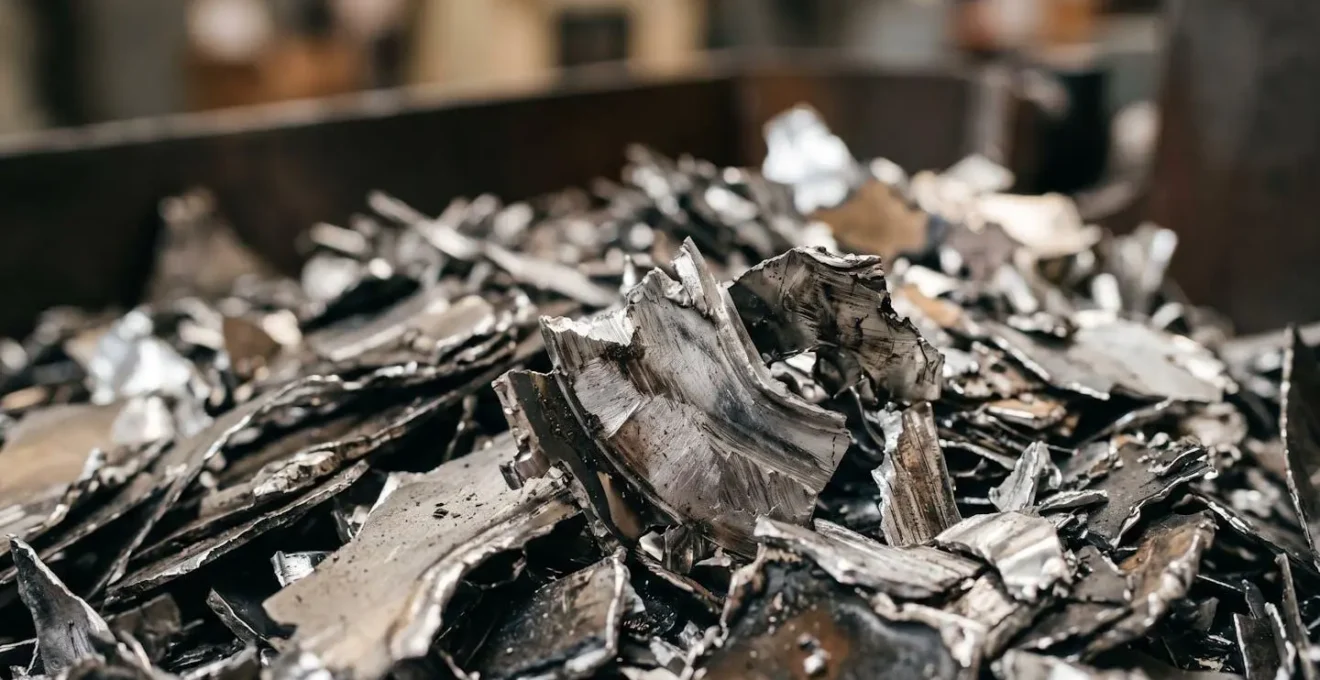
As this image of shredded drive components illustrates, the process aims to completely obliterate the physical medium on which data resides. The choice of destruction method must directly correlate with the sensitivity of the data being destroyed. A clear policy, documented and enforced, is critical for meeting compliance mandates.
The following table, based on common industry practices aligned with GDPR principles, outlines the relationship between security levels, particle size, and data types. This framework helps in selecting the appropriate destruction method to ensure compliance.
| Security Level | Particle Size | Data Type | GDPR Compliance |
|---|---|---|---|
| P-3 to P-4 | Max 160mm² | Confidential business data | Minimum recommended |
| P-5 | Max 30mm² | Financial/health records | High assurance |
| P-6 to P-7 | Micro-cut to dust | Top secret data | Maximum security |
Co-Location vs Complete Cloud Migration: Which Offers Better Stepping Stones?
The path to the cloud is not always a direct flight. For many organizations, particularly those with complex legacy applications or specific regulatory requirements, a phased approach offers a more pragmatic and less disruptive journey. This is where a hybrid strategy involving co-location facilities can serve as a valuable stepping stone. Instead of a high-risk, « big bang » migration, organizations can move a portion of their infrastructure to a professional co-location data centre while migrating other workloads directly to a public cloud provider.
This hybrid model is not a compromise; it’s a strategic choice for balancing cost, performance, and risk. It allows an organization to immediately shed the burden of managing its own physical data centre facility (power, cooling, physical security) while retaining control over specific hardware that may not be ready for the public cloud. Industry trends reflect this pragmatic approach; it’s forecasted that by 2027, 65% of enterprises will use hybrid models to optimize their IT environments.
The benefits of a phased or hybrid migration are tangible. A large financial services firm migrating from on-premise Oracle databases and custom Java applications serves as a compelling example. By adopting a staged cloud migration, the firm achieved a 45% reduction in infrastructure costs and dramatically improved application availability to 99.98%. This illustrates that the journey to the cloud can be incremental, with each step delivering measurable value and reducing the risk profile of the overall project.
The Asset Disposal Mistake That Leaves Customer Data Accessible in Landfills
The single greatest risk in any server decommissioning project is the failure to maintain an unbroken chain of custody for every single data-bearing asset. The moment a hard drive or server leaves your facility, you must be able to account for its location and status until you receive a certificate of its final destruction. Any gap in this documented trail creates a window of opportunity for data loss and introduces significant legal liability. An un-tracked server that ends up in a landfill is not just an environmental issue; it is a potential data breach waiting to happen.
Regulatory bodies are unequivocal on this point. As the UK’s Information Commissioner’s Office, the enforcer of GDPR in the region, makes clear, the responsibility lies with the data controller. According to their guidance on GDPR Data Destruction Requirements, you must be able to prove that all sensitive data has been securely and irretrievably destroyed. This « ability to prove » is the core of the chain of custody. Without a complete, auditable log from collection to destruction, you have no defensible position in the event of an audit or breach.
The chain of custody is not a matter of trust; it is a matter of process and verification. Partnering with an IT Asset Disposition (ITAD) vendor is standard, but you must demand and verify their adherence to strict security protocols. An uncertified vendor using un-tracked vehicles is a liability, not a solution. The process must be documented, transparent, and auditable from end to end.
Your Action Plan: Chain of Custody Security Checklist
- Document every device with serial numbers before collection.
- Use GPS-tracked vehicles with sealed containers for transport.
- Verify ITAD partner’s R2 or e-Stewards certifications.
- Demand third-party verification of shred size to DIN standards.
- Obtain certificates with unique reference numbers for audit trails.
Recovering Capital by Reselling Valid Components Through Certified Channels
While security and compliance are the primary drivers of a decommissioning project, the opportunity for capital recovery should not be overlooked. Legacy hardware is not uniformly worthless. Enterprise-grade servers, networking equipment, and storage arrays often contain valuable components such as RAM, CPUs, and power supplies that retain significant value in the secondary market. The key is to approach this as a formal value recovery process, not an ad-hoc sale.
The process begins with a meticulous asset evaluation conducted by a certified ITAD partner. These specialists have the market expertise to determine which components have resale value, which can be repurposed internally, and which must be designated for secure recycling. Attempting this evaluation in-house often leads to missed opportunities or, worse, selling assets without proper data sanitization, reintroducing security risks. A comprehensive IT services provider will help evaluate physical assets to determine the optimal disposition path for each item.
Engaging with certified channels is crucial for two reasons. First, it maximizes the financial return. These partners have established global networks to reach buyers willing to pay fair market value for used enterprise hardware. Second, it maintains the integrity of your security and compliance posture. A reputable ITAD partner guarantees that any component slated for resale will undergo a rigorous, certified data sanitization process before it ever enters the secondary market. This ensures that you are not trading security for a small financial gain. The goal is to extract the maximum possible value from your hardware, both during the migration and afterward, without compromising on security.
How to Connect 20-Year-Old Presses to Cloud Analytics Platforms?
While the focus of this guide is the retirement of IT infrastructure, a powerful strategic parallel exists in the world of Operational Technology (OT). The challenge of decommissioning legacy servers mirrors the challenge of modernizing legacy industrial machinery. In both scenarios, organizations are faced with aging, isolated assets that contain untapped value and potential risk. Understanding how to bridge the old and new in one domain provides valuable insight for the other.
Consider the common industrial problem of connecting a 20-year-old manufacturing press to a modern cloud analytics platform. The machine is mechanically sound but lacks any native connectivity. The solution is not to replace the multi-ton press, but to retrofit it with modern sensors. External IoT sensors can be added to monitor vibration, temperature, and power consumption, while edge gateway devices translate legacy industrial protocols like Modbus into cloud-native formats like MQTT. This data can then be streamed to analytics platforms to enable real-time monitoring and predictive maintenance.
This process of retrofitting is analogous to the asset evaluation in an IT decommissioning. Just as the industrial press is evaluated for modernization, each server must be evaluated: should it be destroyed for security, its components harvested for resale, or can it be repurposed for a less critical task? The principle is the same: making a strategic, value-based decision about a legacy asset. It’s about bridging the gap between the physical, aging asset and the new digital, cloud-based world.
The E-Waste Disposal Mistake That Completely Invalidates Your Environmental Accreditations
Beyond data security, the final disposition of hardware carries significant environmental compliance risks. A single server improperly disposed of in a landfill can create compliance liability that undermines an organization’s entire sustainability platform and can invalidate environmental accreditations like ISO 14001. Simply handing off e-waste to a local recycler is not sufficient due diligence. Your organization remains responsible for the final destination of that equipment.
To mitigate this risk, you must exclusively partner with ITAD vendors who are certified to globally recognized e-waste standards. The two most prominent certifications are R2 (Responsible Recycling) and e-Stewards. These are not just badges; they are rigorous, audited standards that prohibit the landfilling of hazardous materials, forbid the export of e-waste to developing countries, and ensure worker safety. Demanding one of these certifications from your disposal partner is a non-negotiable requirement for any environmentally responsible decommissioning project.
Understanding the differences and requirements of these standards allows you to make an informed choice of partner and build a defensible environmental compliance strategy. The choice of certification can depend on regional specifics or a focus on particular aspects of the circular economy.
This table compares the major e-waste certification standards, providing a framework for vendor selection as described in a recent analysis of data destruction standards.
| Standard | Region | Requirements | Environmental Focus |
|---|---|---|---|
| R2 | Global | No landfill, no export | Responsible recycling |
| e-Stewards | Global | No prison labor, tracked disposal | Ethical disposal |
| WEEELABEX | Europe | Material recovery reporting | Circular economy |
| ISO 14001 | Global | Environmental management system | Continuous improvement |
Key Takeaways
- Financial Imperative: The true cost of legacy data centres is the ongoing operational drag. Decommissioning is a financial strategy to cut TCO and reallocate resources to innovation.
- Defensible Security: Compliance requires auditable, physical destruction of data carriers. An unbroken, documented chain of custody is your only defence against liability in case of a breach.
- Auditable Compliance: Environmental responsibility is not optional. Partnering exclusively with R2 or e-Stewards certified vendors is mandatory to avoid invalidating corporate green accreditations.
Architecting Energy-Efficient Tech Infrastructures for Green UK Businesses
Successfully decommissioning a legacy data centre is not the end of the journey; it is the beginning. The strategic objective of this entire process is to transition to a modern, efficient, and sustainable technology infrastructure. By eliminating power-hungry, inefficient servers, you create the opportunity to architect a green-native environment in the cloud that aligns with corporate sustainability goals and delivers significant operational advantages.
The new paradigm of cloud architecture is fundamentally more energy-efficient. Cloud providers benefit from massive economies of scale, allowing them to invest in the most advanced, power-efficient cooling and server technologies that are far beyond the reach of a single enterprise. Adopting a cloud-native architecture can lead to a 45% reduction in infrastructure maintenance costs compared to traditional models, a figure that also reflects lower energy consumption. This new infrastructure should be managed not just by traditional IT metrics, but by new sustainability-focused KPIs.
Building this green infrastructure requires a conscious and strategic approach. It involves selecting cloud regions powered by renewables, optimizing workloads, and holding vendors accountable through their own sustainability scorecards. This is the ultimate payoff for the rigorous work of decommissioning: a lean, cost-effective, and environmentally responsible technology platform that serves as a foundation for future growth.
- Shift from PUE (Power Usage Effectiveness) to CUE (Carbon Usage Effectiveness) metrics.
- Select cloud regions powered by renewable energy grids.
- Implement workload scheduling to run during high renewable energy availability.
- Use cloud providers’ sustainability scorecards for vendor selection.
- Calculate and offset the one-time carbon footprint of migration logistics.
The logical next step is to initiate a comprehensive audit of your physical assets with a certified ITAD partner. This will provide the data-driven foundation required to build a defensible, compliant, and value-optimised decommissioning plan for your organization.