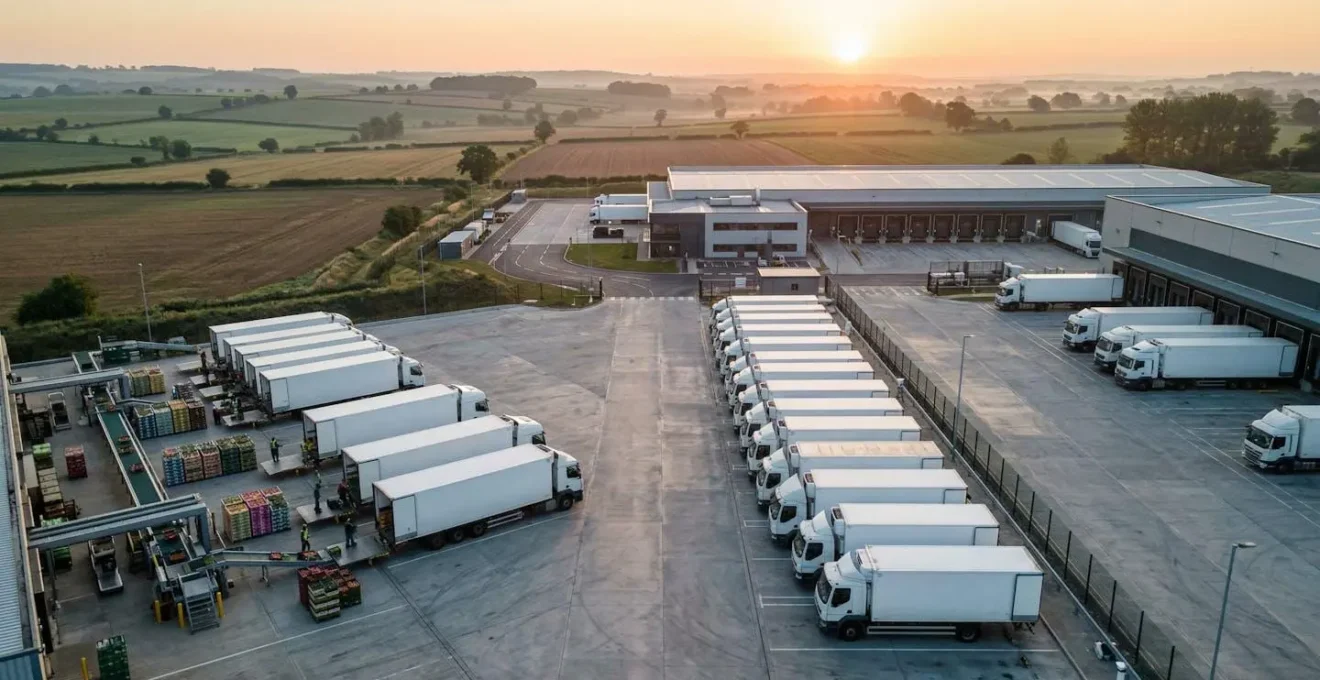
The only viable long-term strategy for UK food and beverage retail is to stop patching fragile EU logistics and architect a resilient, domestic-first supply network as the new core of your operation.
- Over-reliance on European suppliers creates unacceptable financial risks from spoilage, delays, and tariffs.
- A strategic pivot to domestic partners requires rigorous vetting, hybrid logistics models, and carefully structured contracts to manage costs and ensure resilience.
Recommendation: Shift your mindset from crisis management to strategic reconstruction. Use the frameworks in this guide to begin methodically de-risking your supply chain and building true logistics sovereignty.
Another lorry stuck at customs, another pallet of fresh produce approaching its sell-by date in a portside queue. For UK Supply Chain Directors in the food and beverage sector, this scenario is more than a daily frustration; it’s a multi-million-pound drain on the bottom line. The post-Brexit reality has been a relentless battle against border friction, spiralling tariffs, and the inherent fragility of long-distance, just-in-time supply chains. The constant firefighting has left many leaders exhausted and questioning the viability of their legacy logistics models.
The common discourse revolves around familiar platitudes: « diversify suppliers, » « invest in more technology, » or « negotiate better terms. » While not incorrect, these are tactical patches on a fundamentally broken system. They fail to address the core strategic vulnerability: a deep-rooted dependency on a European logistics network that no longer serves the UK’s interests reliably or cost-effectively. The challenge isn’t to get better at managing delays; it’s to design a system where those delays are no longer the primary operational concern.
But what if the solution wasn’t about finding a new supplier in Spain or a cheaper haulier in Poland? What if the key is a radical re-architecting of the entire supply network, pivoting from an international-default to a domestic-first model? This isn’t about simply « buying British. » It’s about achieving logistics sovereignty—a strategic state where your operation is insulated from external shocks because it is built upon a resilient, flexible, and predominantly local foundation. This is a move from reactive defence to proactive design.
This article presents a pragmatic blueprint for that transition. We will dissect the true costs of inaction, provide frameworks for vetting and integrating domestic partners, analyse the trade-offs between distribution models, and outline a strategic path to reducing dependency on volatile international markets. It’s time to stop managing the crisis and start building the future.
To navigate this strategic overhaul, this article is structured to guide you through the critical decisions and frameworks required. The following sections provide a comprehensive roadmap for building a resilient, domestic-first supply chain.
Contents: A Blueprint for Localising UK Food and Beverage Supply Chains
- Why Relying on Single European Suppliers Costs UK Supermarkets Millions in Spoilage?
- How to Vet Domestic Agricultural Partners for High Volume Contracts Safely?
- Regional Distribution Centres vs Direct to Store: Which Guarantees Fresher Produce?
- The Over-Localisation Trap That Drastically Inflates Your Baseline Ingredient Costs
- When to Phase Out International Logistics Contracts to Avoid Redundancy Fees?
- Fixed vs Variable Pricing Contracts: Which Survives Economic Shocks Better?
- How to Implement Just-in-Time Deliveries Without Risking Empty Shelves?
- Reducing Stockholding Costs to Free Up Working Capital in UK Retail
Why Relying on Single European Suppliers Costs UK Supermarkets Millions in Spoilage?
The hidden tax of post-Brexit logistics is not found on an invoice; it’s measured in spoiled produce, penalty clauses for empty shelves, and the corrosive effect on consumer trust. Relying on single-threaded supply lines from the continent has transformed a manageable risk into a critical vulnerability. Every delay at the border, every new piece of paperwork, and every unexpected tariff directly translates into reduced shelf life and increased waste. The financial impact is staggering, moving far beyond the simple cost of goods.
The pre-Brexit model was built on the assumption of frictionless trade. That assumption is now invalid. A worst-case « no-deal » scenario analysis showed that potential import reductions could reach 87%, a catastrophic figure for any grocer. While this extreme has been avoided, the chronic friction remains. In response, many retailers adopted stockpiling strategies, but this is a blunt and costly instrument. It ties up working capital in inventory, increases warehousing costs, and, paradoxically, can lead to more waste as the ‘first-in, first-out’ principle struggles against unpredictable demand. This volatility forces constant price adjustments, creating confusion and eroding customer loyalty.
The core issue is a loss of control. When your produce is on a lorry in another country, you are a passive observer, subject to geopolitical whims and third-party inefficiencies. This dependency is not just a logistical problem; it’s a strategic liability. Calculating the true cost requires looking beyond landed cost and factoring in spoilage rates, lost sales from stock-outs, and the brand damage caused by inconsistent availability and quality. When viewed through this lens, the price of maintaining the status quo is far higher than the investment required to build a resilient, domestic alternative.
How to Vet Domestic Agricultural Partners for High Volume Contracts Safely?
Pivoting to domestic suppliers is not a matter of simply swapping a Spanish grower for a Cornish one. It requires a fundamental shift in procurement strategy, moving from transactional relationships to deep, data-driven partnerships. The risk is high; a failure to deliver at volume can be more damaging than an import delay. Therefore, a robust and systematic vetting process—a De-Risking Protocol—is not optional, it is essential for securing your supply chain.
The first stage of this protocol is a comprehensive capability audit. This goes beyond checking certifications. It involves assessing a potential partner’s scalability, technological maturity, and financial stability. Can their infrastructure handle the ramp-up to supermarket volumes? Do they use modern data systems for yield forecasting and quality control, or are they reliant on spreadsheets and intuition? A deep dive into their financials is also critical to ensure they have the capital to invest and withstand market shocks. This isn’t about mistrust; it’s about building a partnership on a foundation of proven capability.
The next stage is operational alignment. This means integrating the partner into your systems for demand planning and logistics. The ideal partner is not just a supplier but an extension of your own supply chain. This requires transparency and a willingness to share data on both sides. On-site visits are non-negotiable, not just to inspect facilities but to understand their culture, processes, and the expertise of their team. A pilot program, starting with a smaller volume or a limited number of stores, is a crucial final step. It allows both parties to identify and resolve operational friction in a low-risk environment before committing to a high-volume, long-term contract.
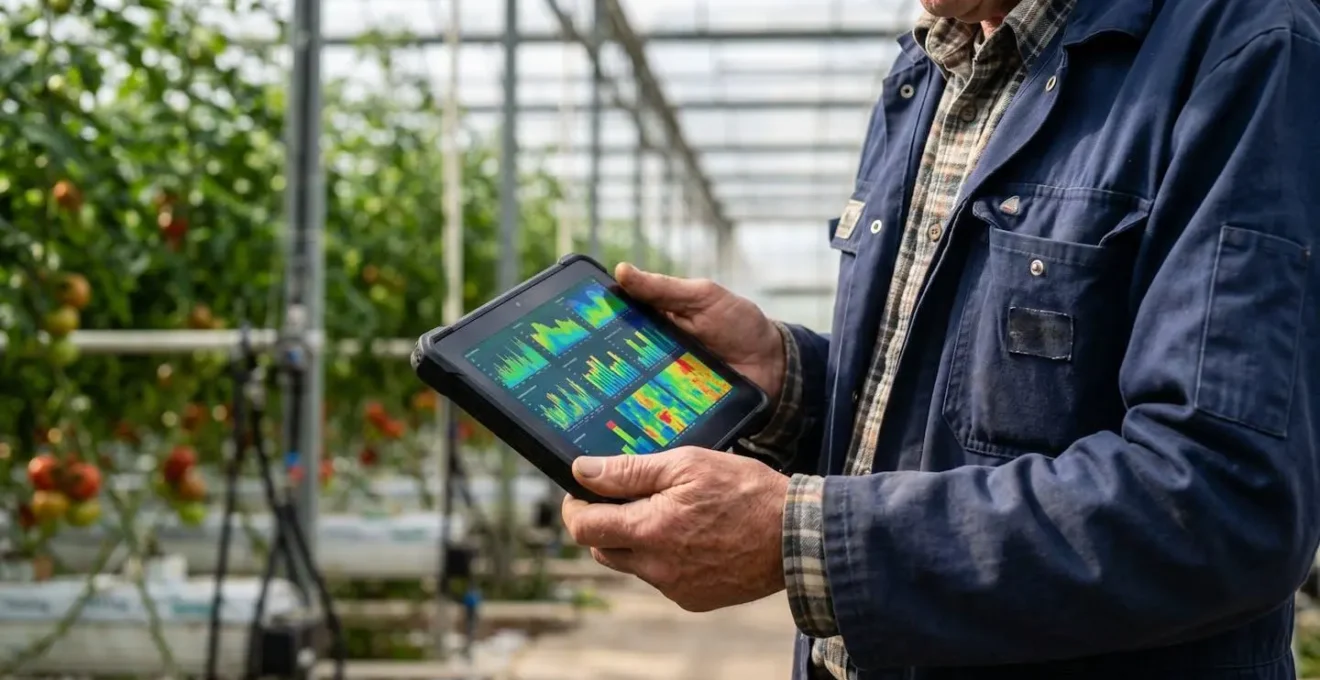
Ultimately, vetting is about future-proofing. You are not just buying produce for next quarter; you are investing in a partner for the next decade. The right partner will demonstrate a commitment to continuous improvement, a solid investment in AgriTech, and a collaborative mindset. This rigorous process ensures that the move to domestic sourcing strengthens your supply chain’s resilience rather than simply trading one set of risks for another.
Regional Distribution Centres vs Direct to Store: Which Guarantees Fresher Produce?
The debate between using Regional Distribution Centres (RDCs) and delivering Direct to Store (DTS) is a classic logistics trade-off between efficiency and speed. In the context of a domestic-first model focused on fresh produce, the stakes are even higher. The traditional RDC model offers economies of scale, consolidating shipments for efficiency. However, it adds at least one extra handling step and 24-48 hours of transit time, which is a significant percentage of the shelf life for perishable goods like berries or leafy greens. DTS, conversely, offers unparalleled speed and freshness but can be prohibitively expensive and complex to scale across a national network.
However, framing this as a binary choice is a strategic error. The optimal solution is rarely one or the other, but a hybrid model tailored to the specific needs of the product and region. For high-volume, stable-demand products, a hyper-efficient RDC functioning as a cross-docking hub may be perfect. For niche, high-value, or extremely perishable items, DTS to a select group of flagship stores could be the best approach. The key is to avoid a one-size-fits-all strategy and instead build a flexible, multi-modal network.
The emergence of advanced technology, particularly digital twins, makes this hybrid approach more achievable than ever. As one supply chain technology expert noted in the Supply Chain Management Review:
Digital twins don’t just give you better data; they give you actionable intelligence. That’s where the real value lies.
– Supply chain technology expert, Supply Chain Management Review
By creating a virtual model of your entire supply chain, you can simulate different scenarios and identify the optimal route for every single Stock Keeping Unit (SKU). This allows for a dynamic approach where the system decides in real-time whether a pallet should go via an RDC or direct, based on demand, inventory levels, and transit conditions. This moves the decision from a static strategic choice to a dynamic operational one, maximizing both freshness and efficiency.
The following data, drawn from analysis of modern supply chain models, illustrates the performance differences and highlights the potential of an AI-driven hybrid approach.
| Metric | Regional Distribution Centre | Direct to Store | AI-Hybrid Model |
|---|---|---|---|
| Average Transit Time | 48-72 hours | 12-24 hours | Optimized per SKU |
| Freshness Score | 75-80% | 90-95% | 92-97% |
| Cost per Unit | £0.45 | £0.62 | £0.48 |
| Scalability | High | Limited | Adaptive |
| Technology Requirements | Basic WMS | Route optimization | Digital twin + AI |
The Over-Localisation Trap That Drastically Inflates Your Baseline Ingredient Costs
While a domestic-first strategy is essential for resilience, a blind pursuit of 100% British sourcing is a strategic blunder. This is the Over-Localisation Trap: the mistaken belief that « local » is always synonymous with « better » or « cheaper. » The reality is that the UK simply does not have the climate or capacity to produce everything we consume at a competitive price. A pragmatic approach requires identifying what we *can* and *should* source domestically, while maintaining strategic international partnerships for products where it makes economic and agricultural sense.
The hard data is sobering. As an agricultural nation, UK production capacity has declined from 80% self-sufficiency three decades ago to around 60% today. This gap cannot be closed overnight. Attempting to force domestic production of certain goods (like citrus fruits or out-of-season vegetables) would lead to astronomically high costs passed on to the consumer, making a mockery of any « cost-saving » objective. The goal of logistics sovereignty is not isolationism; it is control and resilience.
Furthermore, the UK’s own farming economics are complex and challenging. Post-Brexit trade deals have exposed many UK farmers to tariff-free competition from massive agricultural economies, while their own input costs for energy, fertiliser, and labour have soared. As highlighted by ongoing analysis, supermarkets’ powerful negotiating positions often mean they are unwilling to absorb these increased domestic costs, creating a standoff where importing remains the cheaper, albeit less resilient, option. A successful domestic strategy must therefore involve forming true partnerships where costs and risks are shared transparently, rather than simply trying to squeeze producer margins.
The intelligent path is strategic segmentation. Identify core categories where UK agriculture is strong and resilient (e.g., dairy, root vegetables, certain meats) and go deep on domestic partnerships. For categories where the UK has a climatic or economic disadvantage, maintain a diversified portfolio of trusted international suppliers. The strategy is not « local at all costs, » but « local where it provides a strategic advantage in resilience, quality, and predictable cost. »
When to Phase Out International Logistics Contracts to Avoid Redundancy Fees?
Transitioning away from long-standing international logistics contracts is one of the most delicate phases of this strategic pivot. A misstep can trigger hefty redundancy fees, disrupt supply, or damage valuable relationships that may be needed again in the future. The process must be managed not with a single date on a calendar, but with a trigger-based exit strategy driven by performance metrics and risk assessment.
The first step is a thorough review of all existing contracts. Buried within the legal jargon are the force majeure clauses, performance requirements, and termination conditions. These are your tools. Identify any provisions related to systemic disruption (such as Brexit-related friction) that could be leveraged to renegotiate or exit a contract without penalty. This is a task for legal and procurement experts working in lockstep.
The transition itself should be a gradual, phased process. A « big bang » approach where one supplier is switched off and another is switched on overnight is a recipe for disaster. Instead, plan for a period of calculated redundancy, where both the old international and new domestic supply chains run in parallel. This is not a waste of money; it is a critical investment in de-risking the transition. As the domestic network proves its reliability against pre-defined Key Performance Indicators (KPIs)—such as On-Time In-Full (OTIF) delivery rates—volume can be methodically shifted away from the international supplier. This phased reduction, perhaps by 20% per quarter, allows for a smooth wind-down and minimizes the risk of stock-outs.
Your Action Plan: Trigger-Based Contract Exit Framework
- Performance Milestones: Define clear exit triggers, such as the new domestic network achieving a 98% OTIF rate for three consecutive months.
- Parallel Costing: Accurately budget for a 3-6 month period of dual supply chain operation to ensure a seamless transition without service interruption.
- KPI Monitoring: Establish a weekly dashboard to track the reliability, cost, and performance metrics of the new domestic network against the legacy system.
- Clause Documentation: Proactively identify and document all force majeure and Brexit-related exit provisions within your current international contracts.
- Phased Volume Reduction: Create a detailed plan to decrease international volumes incrementally, such as a 20% reduction per quarter, as the domestic network’s stability is proven.
This methodical, data-driven approach transforms a potentially chaotic and costly process into a controlled, strategic manoeuvre. It respects contractual obligations while decisively moving the operation towards its new, more resilient domestic core. It is the hallmark of a senior logistician acting as a strategic architect, not a mere contract manager.
Fixed vs Variable Pricing Contracts: Which Survives Economic Shocks Better?
In a volatile market, the structure of your supply contracts is as important as the logistics network itself. The traditional choice between fixed and variable pricing is another binary trap that sophisticated supply chain architects must avoid. A fixed-price contract offers budget certainty but places immense pressure on the supplier during inflationary shocks, often leading to contract breaches, « unforeseen » surcharges, or even supplier bankruptcy. A variable-price contract protects the supplier but exposes the buyer to crippling price spikes, making financial planning impossible.
Neither model is inherently resilient. A truly resilient supply chain requires a more sophisticated approach to contracting that aligns incentives and shares risk fairly. The answer lies in hybrid contract models that build in flexibility and transparency. For example, a « collared » contract sets a floor and a ceiling on pricing. The price can fluctuate with the market within this agreed-upon band, giving the supplier some protection against rising costs while shielding the buyer from extreme volatility. This shared-risk model fosters a more collaborative, long-term partnership.
Another powerful tool is the index-linked contract, where prices are tied to a specific, transparent, and mutually agreed-upon commodity index (e.g., for fuel or a specific raw material). This removes contentious negotiations from the relationship; the price adjusts automatically based on objective market data. The most advanced form of this is the smart contract, executed on a blockchain. These contracts can automatically trigger payments and adjust terms based on real-time data inputs—such as a confirmed delivery via an IoT sensor—creating a truly transparent and autonomous system.
The table below, based on academic analysis of supply chain resilience, demonstrates how different contract structures perform under pressure. The clear takeaway is that models built on shared risk and data transparency are far more likely to survive economic shocks than their rigid, traditional counterparts.
| Contract Type | Price Stability | Supplier Risk | Buyer Risk | Shock Resilience |
|---|---|---|---|---|
| Fixed Price | 100% stable | High (absorbs inflation) | Low initially | Poor (contract breaks) |
| Variable Price | Volatile | Low | High (price spikes) | Moderate |
| Hybrid Collared | 80% stable | Shared | Shared | High |
| Smart Contract | Algorithm-based | Transparent | Predictable | Very High |
How to Implement Just-in-Time Deliveries Without Risking Empty Shelves?
Just-in-Time (JIT) has long been the holy grail of efficient retail—minimizing inventory to free up capital. However, as the disruptions of recent years demonstrated, traditional JIT models are incredibly brittle. When a single link in a long, lean chain breaks, the result is an empty shelf. The challenge, therefore, is not to abandon JIT, but to reinvent it for a new era of volatility. This means building a Resilient JIT system, underpinned by data, visibility, and strategic buffers.
The foundation of Resilient JIT is predictive demand forecasting. Old models based on historical sales data are no longer sufficient in a market influenced by social media trends and unpredictable events. Modern JIT requires AI-powered forecasting that integrates dozens of variables in real-time: weather patterns, local events, promotional activity, and even social sentiment. This allows the system to anticipate demand spikes with far greater accuracy, enabling it to pre-position stock before the need becomes critical.
Visibility is the second pillar. You cannot manage what you cannot see. This requires end-to-end tracking of inventory not just in your own warehouses, but on the farm, in transit, and at every node of the supply chain. This is where digital twin technology becomes transformative. By creating a live, virtual replica of your entire logistics network, you gain complete, real-time visibility. This allows you to identify potential bottlenecks hours or days in advance and proactively re-route shipments or adjust production schedules to avoid disruptions.
Case Study: Digital Twin Implementation for JIT Optimization
Leading firms are already seeing significant returns from this technology. Companies implementing end-to-end digital twins in their supply chains have reported remarkable improvements, including 15-20% reductions in inventory costs, 5-10% decreases in transportation and warehousing expenses, and crucial 10-20% improvements in service levels. This demonstrates that technology can enable a system that is both leaner and more resilient, debunking the myth that you must choose between the two.
Finally, a Resilient JIT system incorporates strategic buffers. This does not mean returning to massive, costly stockpiles. It means holding a small amount of safety stock at key, upstream nodes in the network rather than at every store. Combined with a highly responsive, domestic logistics network, this buffer can be deployed rapidly to any point of need, providing a crucial layer of insurance against unexpected demand surges without the cost of holding vast amounts of inventory throughout the system.
Key Takeaways
- Strategic pivot: True resilience comes from re-architecting the supply chain with a domestic-first core, not just patching international lines.
- Risk-based partnership: Selecting domestic partners requires a rigorous « De-Risking Protocol » focused on scalability, technology, and financial stability.
- Hybrid models are superior: Avoid binary choices in logistics (RDC vs. DTS) and contracting (fixed vs. variable) in favour of flexible, data-driven hybrid solutions.
Reducing Stockholding Costs to Free Up Working Capital in UK Retail
In the low-margin world of grocery retail, cash is king. Every pound tied up in inventory sitting in a warehouse is a pound that cannot be invested in growth, technology, or improving the customer experience. The strategic pivot to a domestic-first model presents a unique, once-in-a-generation opportunity to fundamentally redesign inventory strategy, slash stockholding costs, and inject vital liquidity back into the business.
The primary mechanism for this is the transition from a traditional « stockholding » model to a « flow-through » distribution model. With shorter, more reliable domestic supply lines, the need to hold weeks of inventory as a buffer against import delays vanishes. Instead of warehouses, distribution centres can be reconfigured as high-velocity cross-docking hubs. In this model, inbound shipments are not stored; they are sorted and immediately dispatched to outbound vehicles, often spending less than 24 hours in the facility. This dramatically reduces inventory levels, storage costs, and handling requirements.
This transformation is powered by the same technologies that enable Resilient JIT. IoT sensors provide real-time tracking of goods, AI-powered routing systems direct products through the hub with minimal human intervention, and a digital twin of the entire operation allows for continuous optimisation. The goal is a « zero-touch » process where inventory flows rather than rests. The financial impact is direct and substantial. Analysts estimate that a fully optimised flow-through model, enabled by a digital twin, can lead to cost improvements of over 11%, a significant figure in an industry where margins are razor-thin.
Freeing up this working capital has a powerful domino effect. It provides the funds to invest in the very technology that drives further efficiency. It allows for more aggressive pricing or investment in quality to win market share. It strengthens the balance sheet, making the business more attractive to investors and more resilient to financial shocks. Ultimately, reducing stockholding costs is not just an operational goal; it is a profound strategic lever for unlocking growth and securing the long-term health of the enterprise.
The time for incremental adjustments and temporary fixes is over. The blueprint is clear: a decisive, strategic pivot to a domestic-first, technologically-enabled, and resilient supply chain is the only path to sustainable success in the new era of UK retail. Assess your vulnerabilities, architect your new network, and begin the transition today.